I’ve got friends on the other side…
TLDR;
Photographs taken of one group, by another.
Lecture Notes
As humans, we naturally assign a person a step in our hierarchies. Older siblings are higher than us, teachers are above, Specialists are the top of their field.
We naturally catagorise people based on the information we have about them, regardless of whatever the truth of the situation is. Our boss will always be above us, regardless of whether we’re actually more adept for the role than them.
Dan starts discussing the Stamford Prison Experiment, something that was, and still is, highly controversial. He discusses how easy it is to take on certain roles. A modern example would be the Customer Service Voice that retail workers put on against their actual tone and inflections. That being said, we also have our own internal prejudice and assign people our own roles/categories.
When it comes to groups within society, we assign and order these based on our own interpretation and understanding. It’s the “Ignorant against Arrogant” argument.
Do we categorise X as X because we genuinely believe that’s where they belong or is it because we don’t actually know anything else other than that?
Photography allows us to see the others in their settings, interacting as normal and let’s us be more informed around our catagorisation of people. That being said, from what Dan’s discussed, It can also be used as a weapon to urn people the other way. This then heads down the route of propaganda and misinformation.
Other times, genuine curiosity can be turned into something hateful, whether intentional or not. Dan discussed Sir Francis Galton who took photographs of one specific category of people (Jewish, Convict, etc) and overlayed them. His theory was that there were similarities between them that could be used as identifiers.
Instead, he created a basis for most stereotyping and racial profiles going forward. This was, as I understood it, the birth of the “Jews & Big Noses” stereotype however, at this time, I’ve not checked that.
What was mentioned was that this was the birth of Eugenics. The idea that traits are genetic and can be bred in and out of people.
Moving away from the doom and gloom, the common nature of photographs now allow for a new way to define individualism. We can showcase any aspect of our lives. Platforms like Instagram and Snapchat, allow people to show themselves as they want to be seen. On the flip side, that means that alot of the bad side is hidden away. We perceive influencers as all shiny, perfect and beautiful. Whereas we don’t see that they actually live in trackies and an oodie the other 99% of the time.
Research
Jim Britt’s Sisters
I came across Britt’s collection when looking for another week’s project, finding it appropriate for this weeks. A collection based around sisters, girlhood and growing up, all photographed by their father.
Britt said in his interview:
“It was for fun, I had no agenda other than that, but these photos seem to have since touched so many people.”
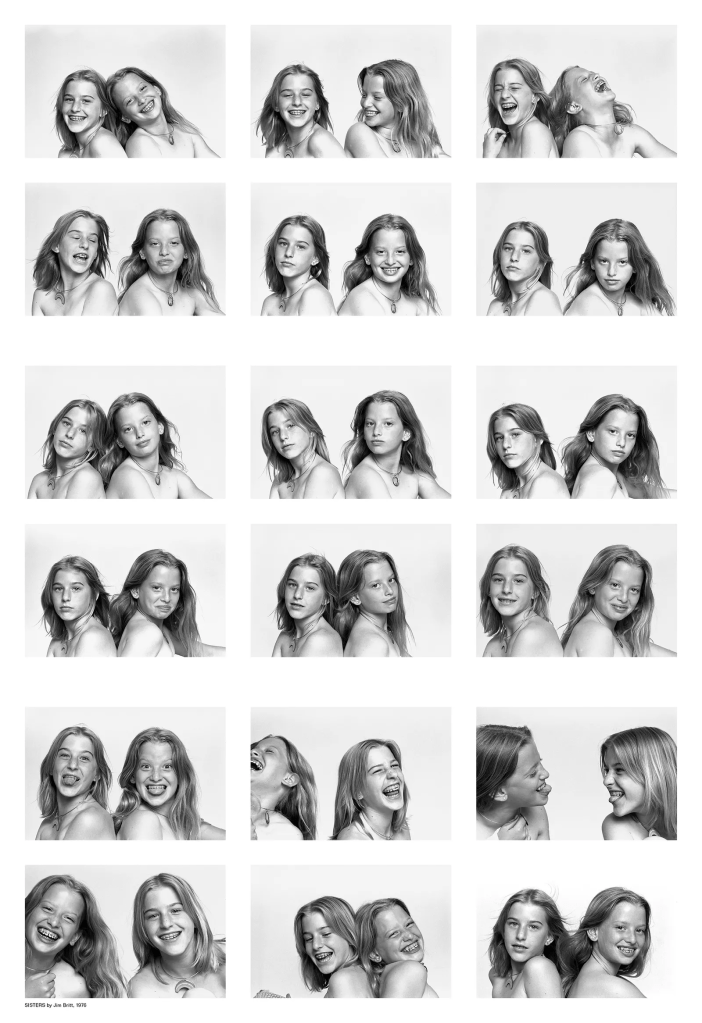
Focusing on the unfiltered reactions of his daughters, prior to the influence of adolescence and societal expectations. It’s showing the side of feminine youth that is often missed. We see a lot of the moody teenagers, the “pretty Princess” era but not of this pre-teen era. Braces, jewellery alongside laughter and awkward moments.
This collection was taken back in the 70’s, prior to the influence of the internet and social media. Before pre-teens had access to the influencer’s and trends that the 90’s onwards were exposed to.
Elinor Carucci: Mother
Focusing on the raw aspect of motherhood, covering the pregnancy, birth, all the way to the toddler years. Showcasing the sides of motherhood normally left behind closed doors. Focusing on different ages, experiences and
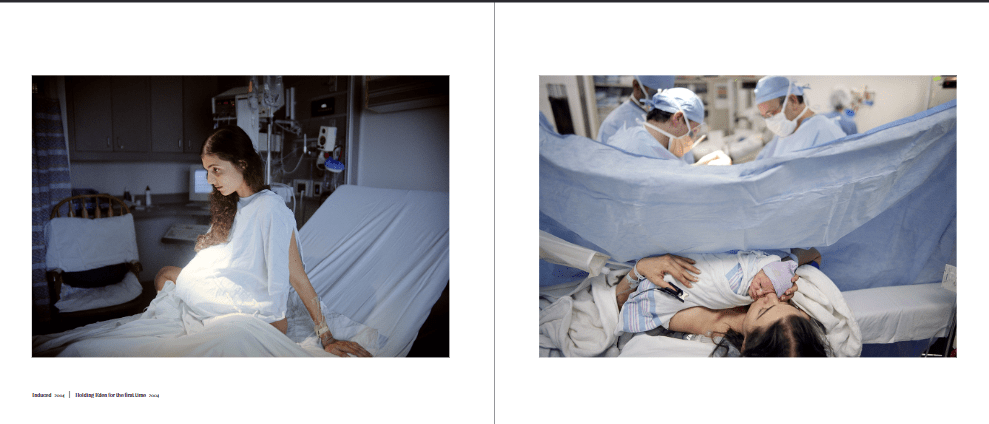
Mother explores the multifaceted nature of motherhood, its highs and lows, and challenges idealized representations of parenthood.
Instead of showcasing a “sunshine and rainbows” approach to motherhood, Carucci focuses on the raw emotions. The physical changes, the overstimulation and the fatigue that comes with it. She also focuses on the honest depiction of motherhood later on, the tempter tantrums, the mess and the aspect of your child growing up. Most people associate motherhood with joy, love and adoration for your child. Not the real nature of a tiny screaming human that you have to teach how to be human.
The beautiful aspect of this collection, drifting slightly from the topic, is that it’s the correct side of the diagram showcasing the work. Carucci herself is a mother, showing what she’s experienced and her truth of motherhood. Instead of someone capturing her moments, she’s captured her own and shared it with other mothers.
Weekly Task
Find a depiction of ‘the Other’.
Pyramids of Giza & Cairo
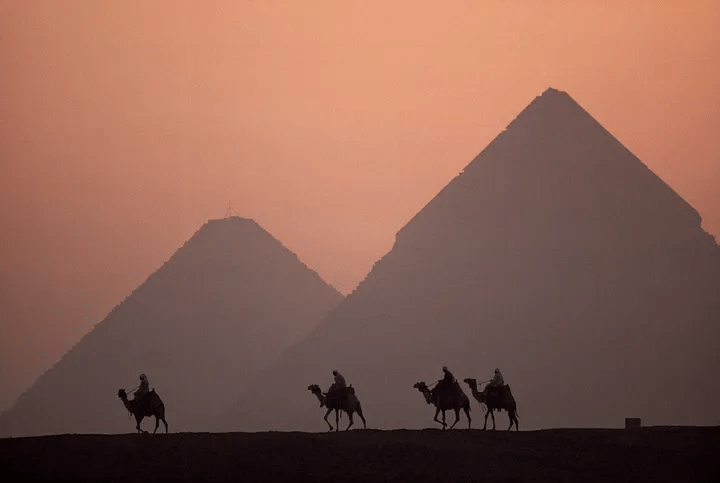
Why have you chosen this image?
I have always wanted to visit Egypt. Between a love for Egyptian history/mystery and travelling, I’d always wanted to experience this myself. It wasn’t until a few years ago I realised how much this depiction of the Pyramids was a lie. As someone who’s never been myself, I had no reason not to trust the photographs.
Egypt and the pyramids always been portrayed as surrounded by barren desert, third-world villages and low status. Not the bounding metropolis it actually is. With a population exceeding 22 Million, it surpasses major capitol cities like Washington DC and London.

The Pyramids of Giza are viewable throughout Cairo, showing just how close they are. To be specific, you can drive from Cairo airport to the Pyramids in less than an hour. It’s a complete fabrication, one that Hollywood has supported. This has then caused issues, similar to my own, where the whole of Egypt is depicted wrong.
This then goes further on, changing how the “west” views the whole country.
Heading down the anthropological route, Stuart Tyson Smith is a Egyptologist and Anthropologist, known for his work assisting historical accuracy on sets like Stargate and The Mummy. His research breaks down the issues between western depiction and scientific evidence of how Egypt is depicted, both ways. Not just West onto East, but the other way around.
“Any characterization of race of the ancient Egyptians depends on modern cultural definitions, not on scientific study. Thus, by modern American standards it is reasonable to characterize the Egyptians as ‘black’, while acknowledging the scientific evidence for the physical diversity of Africans.”



Leave a comment