Still or Moving? Just don’t blink! (Heh, weeping angels reference)
TLDR;
Cinematic photography and Photographic Cinema.
Readings
Excerpt from David Campany’s (2008) Photography and Cinema
Speaking generally, Metz makes a point about photography and film being compared to fetishes. He states how film is compared to voyerism, being an outside eye looking in. Whereas I understand where he’s coming from, there is one main issue I have with this concept. Generally speaking, voyerism is a form of fetish. Yes, there’s the whole “Film came from photography” argument however that’s like comparing the older sibling to the younger. Yes they both have the same birthplace however, they are two different things.
Photography is a still image, something that holds you hostage, awaiting an answer that’s never going to come. Film gives you everything you want. The before, during and after, if following Todorov’s structure. If anything, photography holds more voyeristic powers than film due to the potential photography holds and the lack of answers given.
Lecture Notes
Chicken or the egg? Well in this case, Photography came first and cinema followed. However the two share so many similarities and influence each other throughout history. They both use their respective methods to tell stories and show experiences. They both use their mediums to influence our perception of reality. We trust what we see through video just as much as we would a photograph. However, cinema has the clear distinction between fiction and non-fiction.
The main difference between the two, however is the way it portrays the narrative. Cinema allows for dialogue, exposition as well as the Before/After. Photography shows you only one aspect of the event. Unless you start heading to a collection or Diptych/Triptych. Cinema requires the viewer to follow their story, their narrative and their themes. Photography allows the viewer to interpret what they see however they deem fit.
That being said, the boundaries between the two have blended over the last few decades. Cinema has started incorporating stillness and photography has taken a more cinematic approach. In this, there is one connection still which is the staging. Both shift away while retaining the connection of staging their shots.
Referring back to last week, there’s the discussion of power and representation between the two. Cinema is considered more powerful as it can showcase more. However, Photography allows more freedom. Although they have both fallen victim to the same concept: The Gaze
Specifically, the Male gaze. The idea that men will only watch if there is an attractive female present. From this, the image of the female was lessened to nothing more than the “Pretty Sidepiece”. The best example is the idea of the old Bond Girls. In recent decades, there have been attempts to remove the idea of the Male Gaze and return the image of the female back to the female. That being said, there was also the introduction of The Bechdel Test.
This is a test films are put through to see if two female characters could hold a conversation about the concept without it involving a man. A brilliant example of this is K-Pop Demon Hunters. A woman focused film, with love interest that doesn’t prioritized the love interest in it’s story. Whereas Photography cannot be fed the Bechdel Test, it has it’s own impact as such – as mentioned a few weeks back.
Overall, whereas they feed each other, Cinema and Photography don’t just show us the world. They also influence how we see, interpret and understand it.
Research
Cosplay
An aspect that is special to me and shows how Cinema and Photography have come full circle, is Cosplay. People are inspired by cinema, a film or TV show, to recreate their characters and bring them to life. They then take these to events and have them photographed.
It’s a weird circle of
- Watches Show
- Creates Cosplay of character
- Photographs Cosplay & Shares online
- Influences people to watch
- Repeat
But even then, there’s more. In turn, Cosplayers have started influencing creators and animators of characters. In 2013, RWBY Creator, Monty Oum stated he’d designed his characters to have pockets so that Cosplayers had somewhere to put their phones.
It’s become “Art influences people, People influence the Art”.
There’s two aspects of Cosplay I want to cover. First of all is the cinematic aspect of it. With these characters being from film, the photographers want to capture them in the appropriate environment. The best example of this is from Alisdair Watson who specialises in creating film-accurate photographs for the characters.
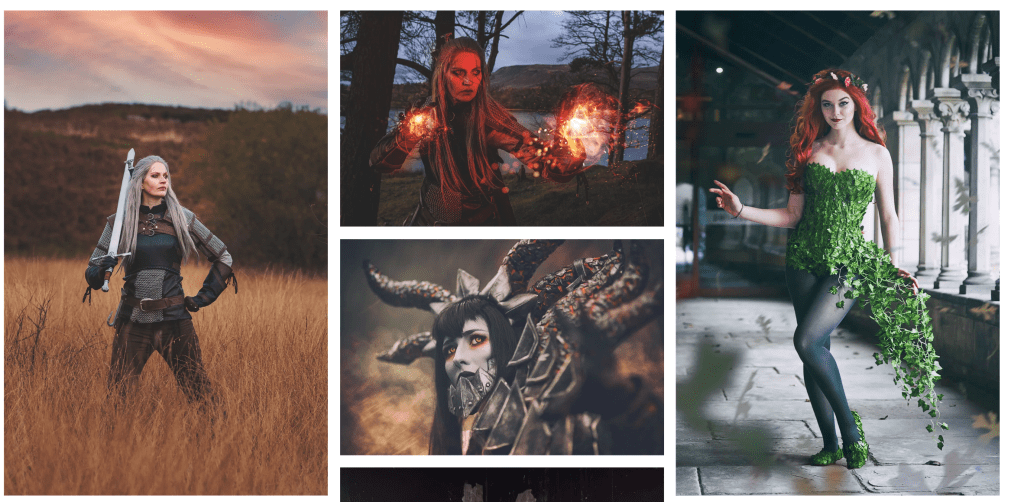
They’re attempting to recreate the experience of the character for themselves, inserting themselves into the story. Almost considered as an extreme form of escapism, literally turning your being into someone else you deem more “interesting”.
There’s also the angle of taking the character out of their setting. I’d covered Thurstan Redding’s book before, Kids of Cosplay. I want to focus on the semi-cinematic aspect of the photographs. While still ripping the character out of the setting, the images themselves are still cinematic. It’s as if they took a real-world drama and casually threw in Spiderman.
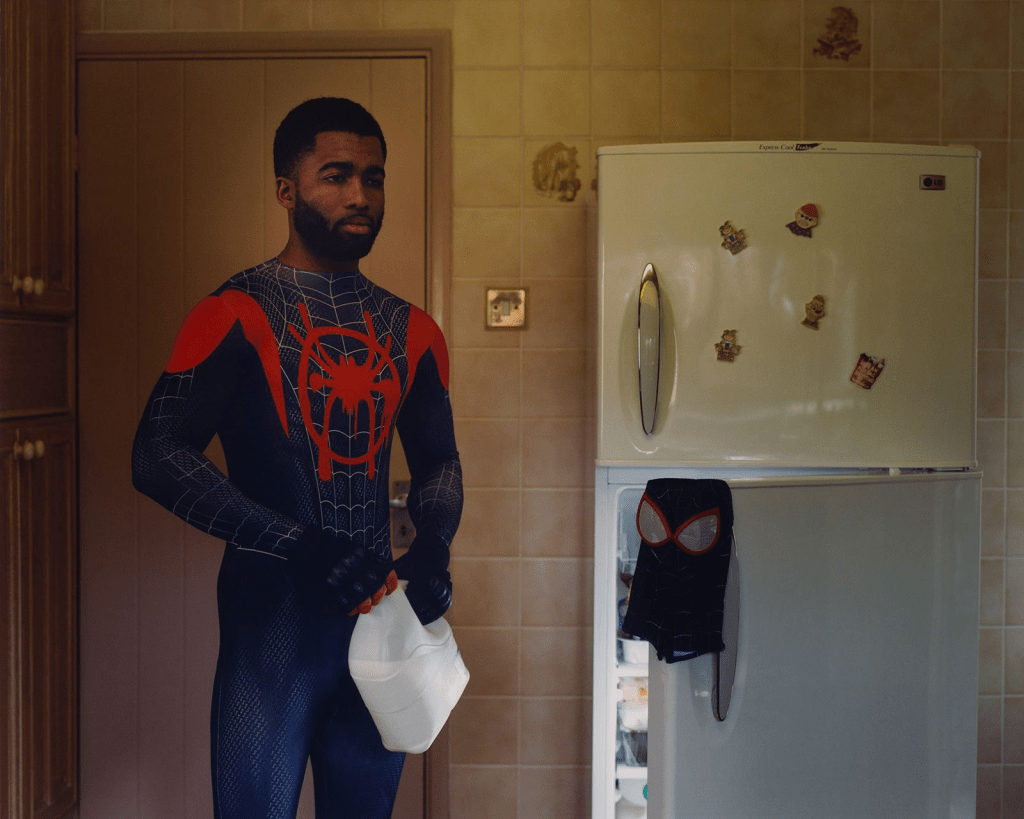
The second point I wanted to cover was the more controversal aspect of Cosplay. As it’s a very freelance art, most have to create an online presence to be able to succeed. With this comes the idea of feeding the algorithm and doing what’s needed to receive traction. One path that a few take is the provocative route. Using the fact sex sells to fuel their career. One example is Jessica Nigiri. A major name in cosplay but is mainly known for using her cosplay for sex appeal.
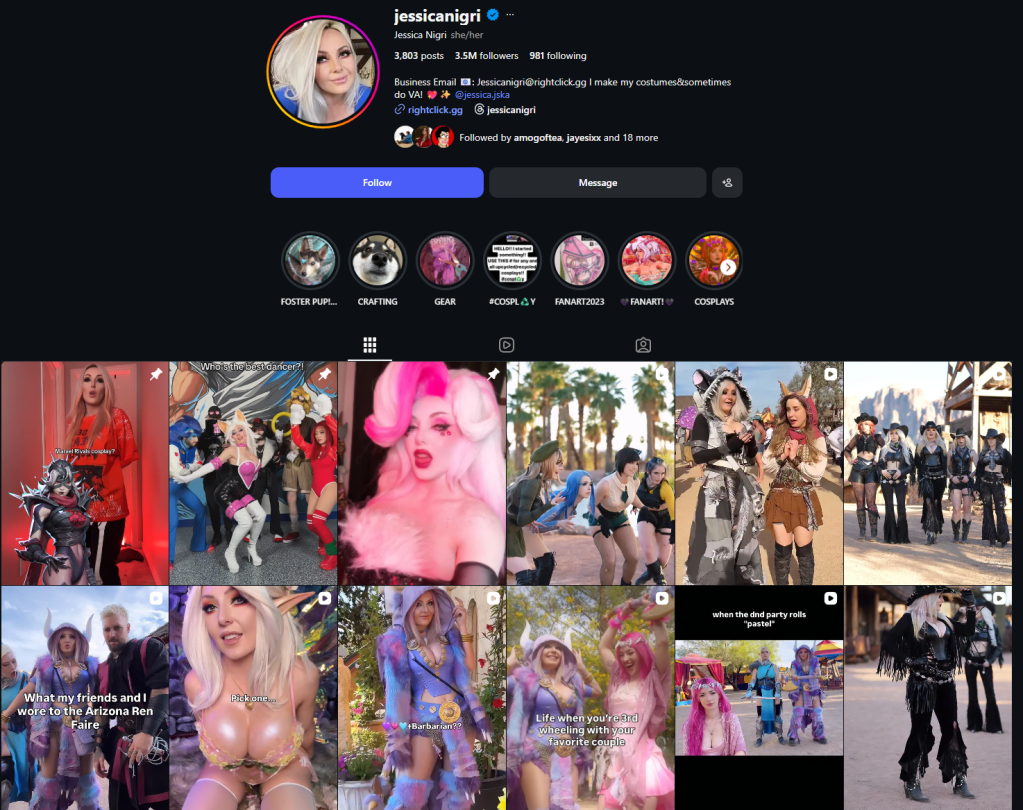
Although her characters of choice may not be of a provocative nature, she twists the characters as such, knowing it will bring traction and attention.
However, in recent decades, cinema has been attempting to remove the stereotype created of the female and shift the Male Gaze. With actions like these, it encourages the shift back to the older mindset of the female body. Not only that, it’s what brings the companies in. They want to advertise, they’ll go to the cosplayer with the highest follower count to bring in the money. Thus fueling the cycle even more.
Weekly Task
Find a ‘cinematic’ image (but not a film still).
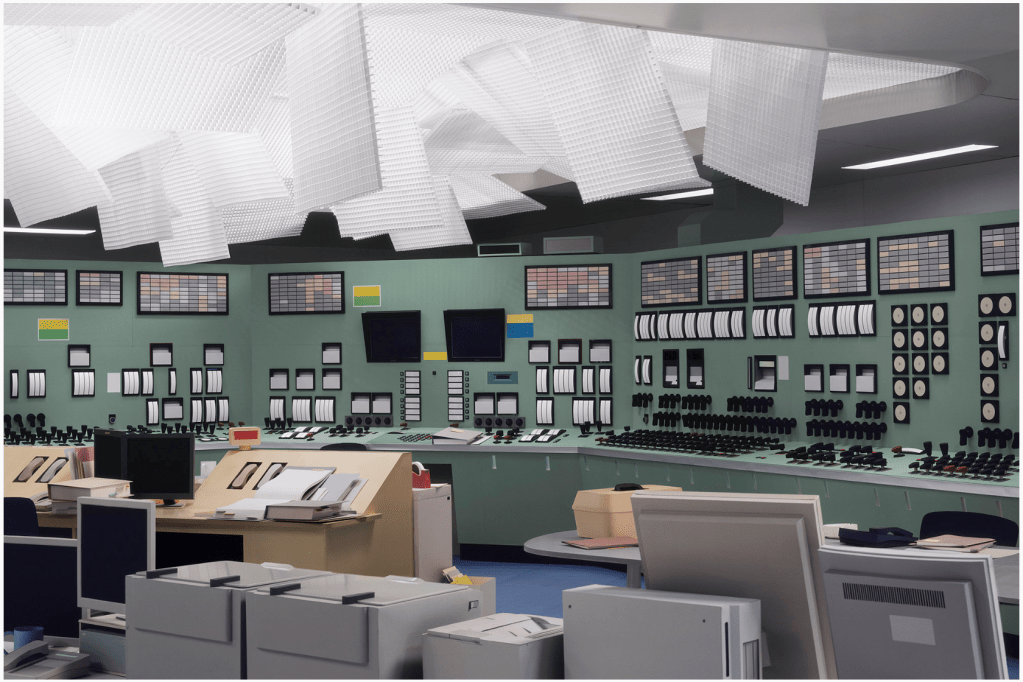
1. Explain why you have chosen the image.
Upon initial looking, I thought this was a scene from a video game. It reminded me a lot of the control panels from Valve’s Source Engine back in 2010’s. It also reminded me alot of the first Mission Impossible film, a personal favourite. It screams “Spy Movie” to me.
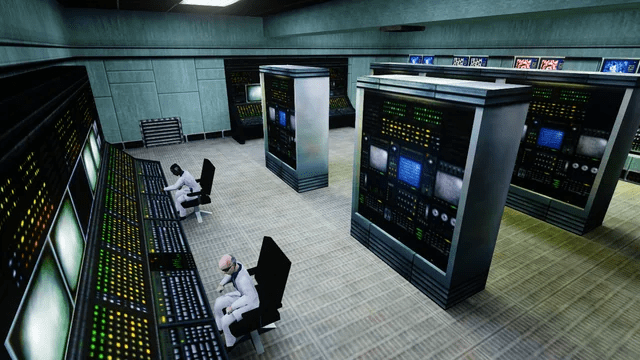
Scene from Half-Life (1998)
2. Describe what makes it cinematic.
As I mentioned above, it screams videogame to me. Where you need to shut down the misile from or need to steal information. It is a perfectly organised chaos, designed to look like dozens of people have been working frantically to solve something. With the added addition of the hanging lights, it’s gives an eerie abandoned feel. Like all the people vanished.
With modern projects like Severance and it’s reference source, the Stanley Parable, the idea of everyone’s disappeared is visible here. It begs the question “Where did everyone go?”.
With the lack of shadows and harsh fluorescent lights, it creates a hollow feeling to the room, like day and night don’t exist. With all the panels on the walls and buttons across the desk, you expect there to be a constant beeping and flashing lights. But everything is turned off.
Composition wise, it feels like you’ve just walked through the door. The boxes/desk in the front blocking your path, hiding something out of view. Your eye is drawn to the green wall of panels, then to the disjointed ceiling lights, further fueling the question of “Where is everyone?”.
It’s trying to tell you something but it’s up to your imaginations as to what.




Leave a comment