Starting to feel like Sisyphus here…
TLDR;
Perspective & Opinions change the meanings.
Readings
Excerpt from Barthes, R (1980) Camera Lucida
Barthes writing is rough to read. With all the detail, it took multiple read-throughs before I was able to understand what he was trying to convey. From my understanding, this excerpt is from where he developed the concept of the Punctum and the Studium. Giving them name and meaning.
One quote that stuck out to me was:
It is rather as if I had to read the Photographer’s myths in the Photograph, fraternising with them but not quite believing in them.
The idea that you’re to look at a photograph through the eyes of the photographer, not through your own. All while believing it to be a fabrication. The concept of “Reading a photograph” means breaking it down into its components. Moving away from the literal and breaking it down into it’s components.
I am majorly struggling with this concept as it’s delving into personal perception and understanding. You’re moving away from a list of rules and codes to follow and into interpretation and meanings. I’ve always understood that there is more to an image than what you see however the interpretation of them changes. Although you’re told there is no wrong answer, in the eyes of the photographer, there is.
Excerpt from – Photography: a Critical Introduction
Heading into the concept of Semiotics and it’s creation, Barthes is a major contributor. Instead of following CS Pierces structure, Barthes went down the route of following the individual and their own interpretations. This excerpt actually explains my difficulty with reading Camera Lucida – It’s narrative and rhetorical. There are no statements, no factual comments and it’s all very open-ended.
One statement from this excerpt that stuck out to me:
Barthes concludes that it is ‘reference’ rather than art, or communication, which is fundamental to photography.
Using items to create references or correlations to other aspects, adding further depth and meaning to an image. I used a similar technique in my Final Piece in foundation year – Using childrens toys when depicting Childhood trauma. It feels like we’re heading down a fine art route.
Reading on, we start attempting to pick apart Barthes ideal however, a phrase specifically stood out to me:
In this sense he views it as ‘a message without a code’ (to use a phrase drawn from his earlier essay on the rhetoric of the image).
Taking a look at Barthes perspective as a whole, I’m starting to think that Barthes thought every image had hidden meanings. Not that some of them are an image for the sake of an image. Playing devils advocate, photographic equipment wasn’t as accessible when he was writing Camera Lucia. Nowadays, we have phones with cameras, computers with cameras and cameras that fit in a pen. Photographs aren’t as scarse as they were 50 years ago and with that, this angle of perception has been lost.
I believe that may be why I’m struggling to comprehend it so much. Although disposable and still film, I’ve grown up with cameras my whole life and would take photos because I could. There wasn’t hidden meanings, specific choices, it’s only since heading down the artistic route have I started looking at this.
Shifting my perspective from Photograph to Fine Art, I can start to see where Barthes is coming from with his ideas. However, I believe that’s because the definition of “Photography” has changes so dramatically in such a short span of time.
Lecture Notes
Word association and Rorschach tests, why and what’s the reason? This weeks lecture through me for a loop. I originally thought we’d be talking about Myths – Urban, folklore or even Greek mythology. I didn’t think we’d be focusing on a book of sociological essays on the connections to visual stimuli. Literally the question of “What makes a sign, a sign?”.
Rorschach, whereas disproven as a psychological evaluation tool, was a grounding example of our topic today. We all see the same image however, what you see in the ink is different to what I see. The same goes for Word Association.
The word is House. You think home, I think building. Whereas both related, our experience and thought processes changes our outputs. That’s when we add the photographical and study aspect of this week.
Our focus for this week as a book called “Mythologies” by Roland Barthes. A collection of essays breaking down and debunking common urban legends and, for lack of a better term, conspiracy theories.
Focusing on the relation to Photography, we’re looking at connotations and denotations. Almost literal and metaphorical connections.
To quote Dan’s lecture, it’s the Objective against the Subjective. For me, we’re heading down a weird and wonderful route that mixes sociology and photography. Not only that, how the context of an image changes the meaning of the image.
Rosie’s Ramblings
Researching this topic sent me down an existential wormhole. You end up looking into linguistics, philosophy and psychology. I even ended up with Sigmund Freud at one point and can’t even tell you how. It’s taken a massive step back to be able to hone in on this topic massively.
Luckily, Lottie had covered the body language aspect of Semiotics during her musical theater degree. Thanks to her, I was given some wonderful starting points.
Research
Reading Photographs – Richard Salkeld
(Chapter Two – “Reading the signs”)
Reading through this, my head started hurting. It breaks down semiotics and the way that they’re studied and interpreted. It breaks down the different ways an image can be interpreted:
- Denotation – The literal and obvious
- Connotation – The associations links to what is denoted
- Iconic Signifiers – The visual resemblance of forms
- Indexical Signifiers – signs that are formed by what we see
- Arbitrary Signifiers – Forms that have no necessary connection.
- Symbolic Signifiers – an arbitrary signifier that associates to ideas and belief.
Using this as a framework, it’s helped understand the Photographic angle of Semiotics easier. I started by breaking down the different aspects used in photography and looking at each one independently.
I kept getting lost in the linguistic side of semiotics and using this format, it helped build a basis of understand.
Colour Theory
During English class, we were always told to read into things like colour choices mentioned by the writer. This, whereas seemed useless in class, actually holds some meaning. However, some of it runs deeper than just correlation and it’s previous uses in society.
Semi-Relevant Rambling
In 2008, a study was conducted looking into competitive video games and seeing which team it was better to play for, red or blue. To quote:
It is likely that “seeing red” may trigger a powerful psychological distractor signal in human aggressive competition that can affect the outcome of sports and virtual contests alike.
There were further studies concluded to corroborate this data but the big one comes from the Association for Psychological Science in 2011 where they looked at Olympic Data and the impact the colours had on the results. To summarise, it found that athletes wearing red performed better, especially in aggressive sports a la Boxing. There have been further studies to confirm these findings weren’t outliers however, I won’t bore you with them. Just as a quick note however, there was a study done into League of Legends, a MOBA game that requires more logic and strategy than all guns blazing. They found that, when looking at the championship matches, teams playing the blue colour actually scored a higher win rate than if they were playing on red. (The original study has been lost – here’s a breakdown from another site documenting on it)
Getting to the why portion – it’s actually a left over trait from evolution, similar to the appendix but mental, instead of physical. We, as human, have always had negative connotations to the colour Red – Blood, Danger, Power, Aggressive. It creates a natural fear response in humans. Think about stop signs. They wouldn’t have the same impact if they were blue. How many times have you missed a sign because it was blue?
Moving on, Blue creates a different response in humans. From a study in British Columbia, they found that Blue triggered a creative response, causing more logical and relaxed environment. This is due to the evolutionary psychology around the colour. Blue is daytime, it’s safe and calm. it’s water and cool.
To summarise the above, there is a major correlation between evolutionary psychology and our reactions to colours. What we do with that correlation however, is where the semiotics come in.
For example:
Blue is a calm, logical and strategic colour however due to my own experience, it’s not a calming colour, it’s a stressful one. This is due to it’s usage at doctors offices and my negative experiences. That being said, someone else may have different relations to it. It’s all subjective to our own experiences.
Each colour has it’s own connotations, given either by society or psychology.
Purple – Royal, Regal – Historically a colour reserved for nobility and royalty
Following that is the symbolic connotations to purple, that of religion and spirituality. On a personal connection to purple, I correlate it with my sister as purples always been her favourite colour.
At the photographical angle, you need to understand the connotations of these colours, the psychology and even the relation it has to your client/recipient. For example:
If you’re taking a photograph for a fashion client at Christmas time, you’re going to use colours that correlate to Christmas (Red, Green, Gold). While also taking into account where the client needs these images. If it’s for a sale, you want the high impact of the colour Red – Sale, Quick thinking, “Must act now”.
Working on personal projects, you can include the colours that hold a personal connection. Personally that’s green. It’s a colour that correlates a lot to me personally but to others, is just a random selection.
Body Language
The act of understanding non-verbal cues, gestures and facial expressions is vital when looking at photography as well in everyday life. It can change the meaning of an image from happy to sad, based on how the subject is positioned.
The different positions you place your subject in, the expressions they hold, change the meaning massively. There are four distinct features that make up body language:
Facial expressions // Body movements & posture // Gestures // Eye contact
Each one has it’s own language, symbolism and meaning behind it. For example – you can smile with your mouth, not your eyes and instead of behind a happy thing, it creates an unsettling aura, almost a depressed expression.
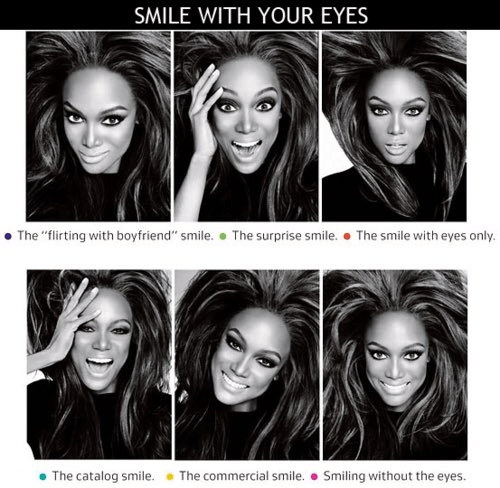
Dictating your models body language changes the meaning of the image and can create vastly different emotions and reactions accordingly. It can also change the meaning behind the image – linking back to the previous mentions of iconic signifiers and the visual meaning behind it all.
Polly Penrose – Work of Art
I came across Polly Penrose when looking into collections that focus on the power of body language and it’s meanings. She uses her medium over seven years to document her literal body language and how it tells it’s own story.
The series documents the effects of time passing on Polly’s body, her relationship with her environment, and the emotional state she was in at the time of the picture.
Literally, it is just images of a woman contorting herself into obscure locations. The connotations however, you can tell that these are different stages of her life, how she’s coping or even how she’s felling. It also creates a feeling of rawness and honesty by her being naked and open. You cannot show a more brutal and human depiction of emotion than this.
Roland Barthes
Appropriating popular culture and repurposing it, draining it of it’s original meanings and repackage it. This creates Myths that carry new and often different implications
This is from the Macat introduction to Roland Barthes’s Mythologies and is probably the clearest explanation as to Barthes ideology that I’ve found. Pop culture takes the original, remixes it and spits out something completely new and something that is removed from it’s original meaning.
Working on that viewpoint, I want to delve into the topic we’ve been set as to modern myths. Something that has had it’s original meaning replaced by something else. The best example of this that I had found was Meme’s and meme culture.
Digital Semiotics – Feri Sulianta
Researching into modern myths & semiotics lead me to a book by Feri Sulianta called “Digital Semiotics”. It uses Roland Barthes perspective to analyse modern digital culture and the impact it’s had.
Digital semiotics examines the signifier and signified in visual and auditory formats, which are often more dynamic and interactive compared to classical semiotics.
It goes on to explain how, unlike classical semiotics, digital semiotics can change on a dime. Context and location change the meaning, situation and emotion. This also changes once you move away from the internet and into concepts like AR and VR, even once you move to video games.
Although I intend to delve deeper into more aspects of this, I plan to focus on one specifically:
Weekly Task
Part One – Modern Myth
1. Find an example of a modern-day myth. How is this visually
represented in society? What does the image signify?
Quite often memes contain satirical content, references to recent events or social commentary. Their nature causes them to spread across social media platforms and develop their own meanings and contexts.
Using C.S Pierres interpretation of semiotics, memes are symbols within a system of signs. They don’t hold their own meaning, but their meanings are given based on the symbols around them. They can adapt and change their meaning on a whim. For example:
An early internet era meme is Doge.
It’s a photograph of Kabosu, a Shiba rescue pup from Japan. His owner, Atsuko Sato posted photos of him to her personal blog and this one, specifically, blew up in popularity.

It quickly became a meme after internet users added an “internal monologue” to the image using Comic Sans text.
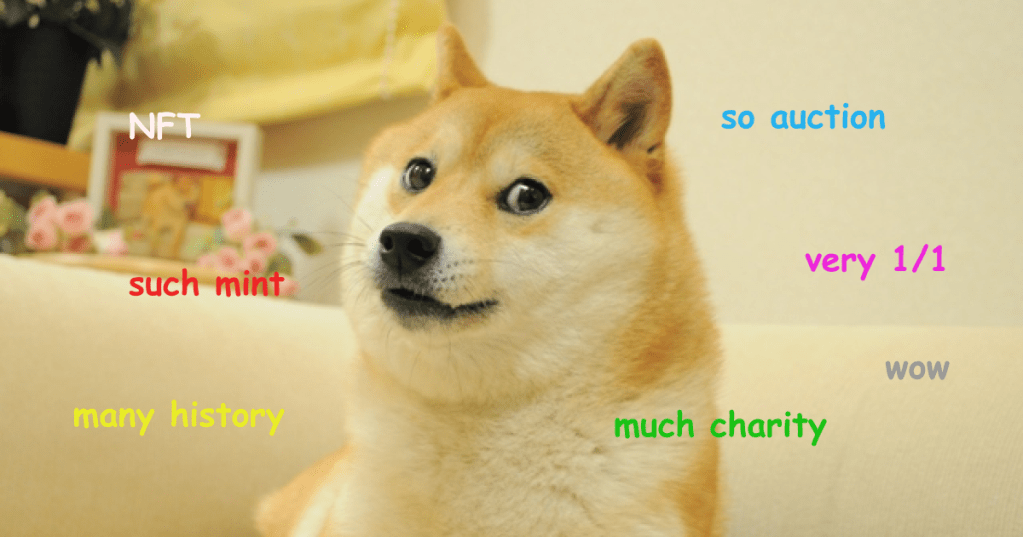
The same image had then been twisted in more ways, creating more sub-memes based off of the original image of Kabosu.
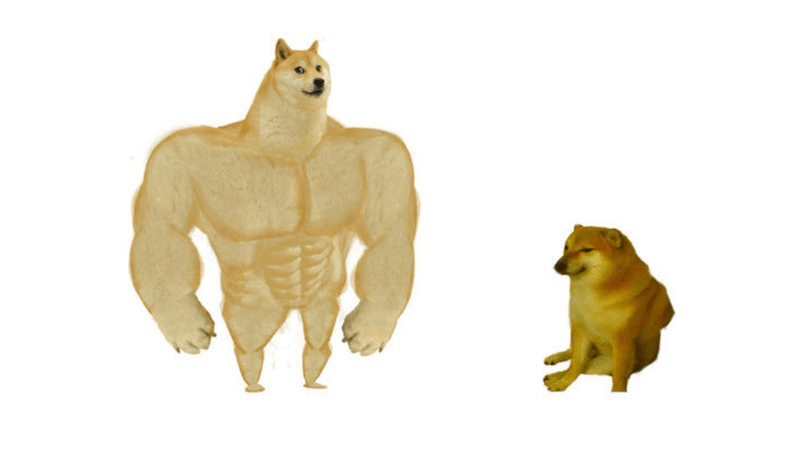
This has then taken two separate images, redefined both of them with little to no meaning. Whereas the origin of this may be lost, adding any other signifier changes the overall context.
Referring back to Suliantas’ book, they discuss how, when analysing memes as signs, they’re not only influenced by it’s visual components, but also the societal and personal experiences surrounding it.
The example Sulianta gives is the “This is fine” meme. One that can be used to symbolise resilience in hard times. It’s been used to comment about different ends of the scales, from personal hardship to major crises. It’s the same image however the severity of it’s impact changes depending on it’s connecting information.
Writing your research paper the night before:

We’re now 85 seconds to midnight :
Both statements are at completely different ends of the spectrum, one joking about a personal issue and the other documenting on the status of world destruction. Yet the image fits both perfectly, adding a layer of dark humour to the mix.
When you start dissecting the memes, you end up finding layers upon layers of internet culture, personal experiences and complex messaging hidden within a simplified format. Their use of symbols and cultural references create a greater understanding than just “picture of dog” or “cartoon frog on a unicycle”.
Part Two – Personal Connection
2. Choose an image that represents the two elements of a
photograph as perceived by Barthes – the studium and the
punctum. Explain why you have chosen the image and what you
identify as the ‘studium’ and the ‘punctum’ of the image and why?
For example, an image that has a meaning we all broadly agree
upon, but also has a meaning that is personal to you.
Studium: The Objective
Punctum: The Subjective
When explaining this concept to others, I like to use this image of Ed as an example:
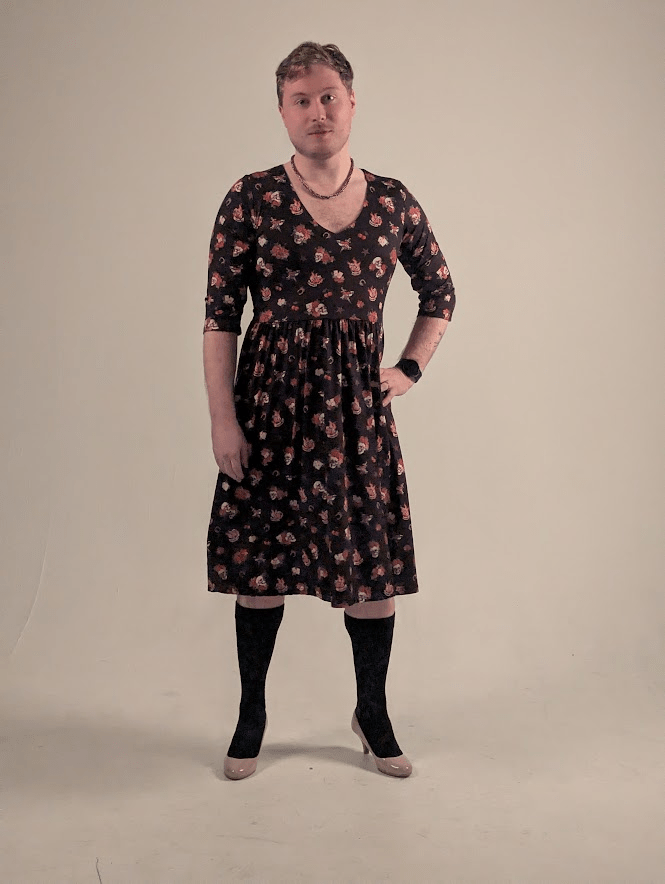
The Studium states that this is a picture of a man in a dress, wearing high heels.
The punctum, from my perspective, differs. As yes, that’s Ed in a dress however that’s my dress and my high heels. Without sounding possessive, he couldn’t be more of my fiancée than in that. It shows what he is willing to do for me to help me succeed.
To others, the punctum could be a statement on Gender Conformity or identity, it could be a reference to the usage of men to model female clothing. It’s a statement of an image however the statement is dependant on the persons perspective and opinions.
People that know Ed will know I’ve had to trick him into this (ergo the face) or that he not-so-secretly enjoyed the experience. Those that know me would know this is not the first time I’ve made people I care about do stupid things for my work.
I chose this image as my reference due to the fact it’s a statement of an image. His body language tells you he’s not happy to be here and seems uncomfortable. However I know his posture is because I’m about to send this photograph to his mother.
It’s photographical breakdown and meaning doesn’t actually match what was actually going on in the moment and what was meant to be said. It’s a happy accident with no original context. Literally? The photo was taken to prove to his mum that I’d actually got Ed to wear my dress.
If you want my actual reason as to why Ed was wearing said dress, it’s not that interesting. I just wanted to see what silly thing I could make Ed do for my last semester project. There was discussion about a statement about Gender Identity between male and female however that’s all dribble. It was literally “What can we do to Ed to wind him up?”.
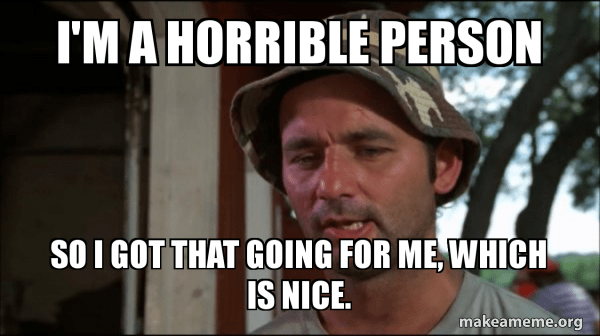
I can be a horrible person sometimes…

 AlphaRose Photography
Leave a comment