A new module, a new set of posts!
TLDR;
What does it mean to “See”? Literally and Metaphorically
Readings
Prior to coming back to class, Dan sent out an email saying that this semester, we’ll be having weekly readings. Normally I’d panic and try and wiggle out of it. However, thanks to my wonderful Christmas gift of a Kindle, I have been able to enjoy reading again.
Long Story Short – I have to read with “Dark Mode” or a coloured overlay. That’s why the website has a pink background. Physical books are a nightmare for me.
John Berger’s (1972) – Ways of Seeing
This week Dan sent out a synopsis for a Dystopian Fiction novel called “Time and Light” by William Bornefeld. Summarising the concept, the city of Fullerton has banned Photography. Our MC goes on an expedition and stumbles across photographs from the 20th Century.
This module looks at the concept of visualising ideas. You want to understand how this idea would be in our world? It’s simple. What would you do if, all of a sudden, the internet ceased to be?
We all use digital & online storage. If we were to lose that, once your battery has died, you’ve lost everything you’ve taken. (Another reason why I prefer hard copies). Should that happen, your entire existence is shot back nearly 100 years & every experience you’ve had is now based solely on your memory.
Rosie’s Ramblings
The concept of a totalitarian government, back in the 20th century, was a terrifying one. In modern days, it’s still terrifying but now is more a possibility. 1984 talks about Big Brother watching you and now, the younger generations joke about the “FBI man in their phones”.
The concept of losing photography isn’t one that is hypothetical anymore. God forbid, we lose the internet or electricity, most photographs documenting the last ~30 years would be lost once the batteries died. I know for me, as much as I have hard copies, most of my work would be lost.
On the drugging a population side… There’s a game called “We Happy Few” which covers the concept of drugging a population into submission. Yet people still refuse to comply and rebel against the system. We, the protagonist, are someone trying to get out of that system.
Mirzoeff – How we think about seeing
The concept that Video Games can help with not only perception but recognition is an interesting point. If you think about FPS games, you get a fraction of a second to figure out if what you’re aiming at is friend or foe. You see a person with a gun, but you need the recognition to understand who/what that person is. This recognition is then fed by the context surrounding it. Friend is blue, enemy is red. Why is enemy red? What did Red do? Why are we against eachother? Who said we had to be against eachother? All information a person is fed, both in games and realistic military situations, by “world building”.
The remainder of this chapter goes on to explain how, even with centuries of research, knowledge and metaphors, we are still clueless about the brain and visual information. Comparing Descartes with modern neuroscience, the math has changes however the scientific understanding is still just theories. With developments in neuroscience and ophthalmology, we are still not sure how/why we perceive the way we do.
The next chapter “Visualising Vision” delves into the Invisible Gorilla experiment from the 1990’s. Dan covered this in the lecture however, one point that was mentioned in this chapter had me thinking.
The author speaks about how he showed a group of students the video and most saw the gorilla. He puts this down to a generation that’s grown up with new media (Video Games, Social Media, TV, etc) however I don’t believe this is the case. As someone who has also grown up with these, and is a self-titled gamer, on my first viewing I did not see the gorilla. I only saw it in subsequent viewings because I knew it was going to be there and what the “trick” was. This isn’t a case of new media changing my perception but instead, exposing me to information prior to when its necessary. Even now, if you changed the gorilla to another item/being, I’d still miss it as I’m not expecting it.
Heading into chapter 3, the topic of “viewing the brain” and MRI’s come into play. It always reminds me of a scene in Greys Anatomy:
It’s a Magnetoencephalography (MEG). A machine that can pick up which sections of the brain are being activated at certain times due to insane science and electrical currents that I don’t fully understand.
Magnetoencephalography (MEG) is the measurement of the magnetic field generated by the electrical activity of neurons. It is usually combined with a magnetic resonance imaging to get what is called magnetic source imaging.
Source – LINK
As in the clip, we can see the sections of the brain reacting to visual stimuli. For the case of Wilson, what makes her happy and sad/angry.
Following on, we talk about how our brains process the images we see. The author talks about interpretation, visual illusions and the concept of visual media. Mentioned was W. J. T. Mitchell and his paradoxical statement of “There is no visual media”. Referencing to the fact that a painting is made with your hands so is not solely a visual piece. Even down to photography – you have to physically take the photograph so is no longer visual and becomes multiple senses used in its creation.
Our final chapter was on the concept of senses, empathy and our ability to mirror those around us. Breaking it down in reverse order, mirroring those around us is a amazingly common thing. Society doesn’t come with a rule book so you need to learn it as you go, normally through those around you. There is also the concept of Autistic Mirroring where you mirror actions, behaviours and social styles. It’s a way for an autistic person to fell connected and safe within a society not built for them. It even stems deeper into topics like echolalia (repetition of words/phrases) and Linguistic Convergence (changing or mimicking an accent). Something that is an external stimuli that our brain mirrors, almost as a way of self-preservation.
The concept of empathy however is one that delves deeper past just the mirroring route. There is a long-going debate about whether Empathy is a learned trait or an inherited one.
Wrapping up the readings, the concept of “visual” isn’t just “I see therefore I know” but more “I see, I relate, I understand, I learn”. Without heading down a deeply psychological route, there are so many branches that break off and make up the sense that we, as humans, don’t fully understand it ourselves. It comes across to me that we’re making up explanations and reasons to stop ourselves going insane.
Lecture Notes
This week is talking about perception, the “way of seeing” and what it means to see. Not only that but also what it means to see conceptually and critically.
Dan begins by talking about the literal side of it. Luckily for me, Ed trained as an optician so the science behind the eye, I understood a fair bit. The science and medical side of the eye and sight is a fascinating topic!
Talking about what it means to see is a tough one. You end up heading down a sociological & psychological route, talking about perception, understanding and recognition. Not only that, you also need to think about brain activity and reactivity. The best example for this, and the one Dan used, was Daniel J Simon’s experiment into Selective Attention.
It’s not that you’re ignoring the gorilla, instead your focused on what’s been asked of you that you’ve not noticed it. It’s similar to the concept of a “Mum Look”. When you’re looking so closely for a specific item that you can’t see it directly in front of you.
Moving away from the literal, we delved into the photographic aspect of seeing and what cameras’ have done for the perception of the world.
The phrase “Seeing is Believing” is thrown to the wind once photography comes into the mix. With a camera and the right skill set, you can create anything. You can show blue skin, pink hair and something that isn’t anything close to your textbook human. That being said, the opposite is true. You can show things that the normal human eye couldn’t even perceive. I have an example of this later on.
Wrapping up the existential crisis, we’re left with this weeks task of selecting two images that demonstrate “seeing” to us & explain why we’ve selected them. With that, let’s get started!
Research
I wanted to start my research with an example of being able to see things that, in normal situations, the human eye wouldn’t be able to perceive. Annoyingly it’s film but the point still stands.
Gavin Free & Daniel Gruchy aka The Slo Mo Guys
Although not photograph per say, it’s still a fantastic example of the power photo & video has for showing things the eye misses. This is all through the Phantom High-Speed cameras.
These cameras operate at such a high framerate that they gather more information and let you see things in “slow motion”. It’s not technically a slowed down clip, more there are too many frames a second that it takes you longer to review it. You view things in 24 or 60 fps, these cameras can operate millions of frames per second.
The two use this technology to show experiments and experiences that happen in seconds in fantastic definition and detail. I have a personal soft spot for these two as it was thanks to Daniel and Gavin that I learned so much about cameras and film.
Here’s my favourite one they’ve ever done!
As they mention, the shattering occurs in a fraction of a second and it takes such a high framerate to capture the moment in any detail.
This video came out in 2017 and whereas the technology has improved, I don’t believe they’ve revisited this. I hope they do one day as I’d love to see the detail in the cracks.
Being able to see things in this way is not only beautiful but so interesting, changing certain perspectives you have. CD’s spinning at an insane speed normally break from the inside out, not the other way around. Why? What causes it? It creates so many questions of the world and you almost demand explanations.
Optical Illusions
I love something that almost breaks reality. Not quite “black hole” level but enough that you’re thinking “What the hell?!”. As someone who’s perception of the world is quite logical and literal, optical illusions fascinate me. You change your angle, ever so slightly, and the whole story changes.
Looking into this more, I came across an article that compares the photographer to an illusionist. Stating that, across our photographs, we’re toying with the lines of reality and attempting to lie to our audience.
By tweaking our perspective, big things look tiny and somehow you’re standing on the ceiling.
Alessia Rollo
While looking through the BJP, I came across Alessia Rollo and an article from 2023, talking about her project “Parallel Eyes”.
It was actually the first line of this article that grabbed my attention:
Photography has long been associated with magic; the way it can stop time, and the alchemy in how images appear in the darkroom.
Relating back to the previous statements on how we, as photographers, are illusionists. We are now also magicians!
Rollo’s intent with this project was to change the perspective of how Southern Italian Culture was seen. Inspired by an anthropological study in the 50’s, Rollo has taken images of that time and modified the negatives to create beautiful pieces about their culture.
Later in the project she’s picked up the camera herself and has taken more accurate images of her culture to correct the narrative.
Photography holds a power to shift narratives, change perspectives and re-write an already solidified story.
Rosie’s Ramblings (Sort of relevant)
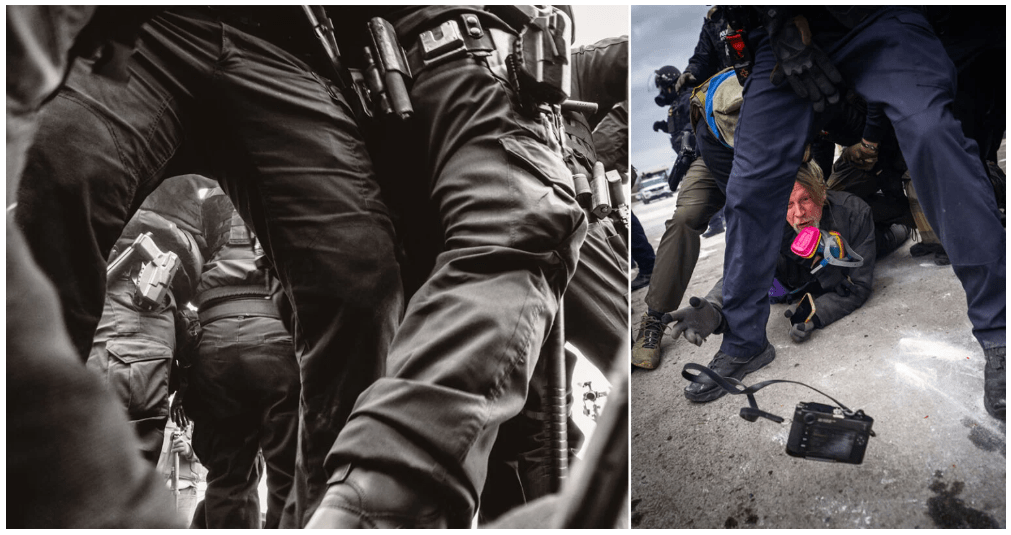
A horrific yet accurate example of photography rewriting, or in this case, correcting the story, is with the current events in Minneapolis. I came across a news article talking about Photographer John Abernathy and his encounter with ICE agents.
To quote the article:

Once again, the narrative has been corrected, thanks to the photographers present at the event. Whether that be professional or just someone with their phone. As horrific as the scenes in Minneapolis are, thankfully the public and photographers can record them in their correct nature. Not as the other side would want them to be perceived.
Deborah Padfield
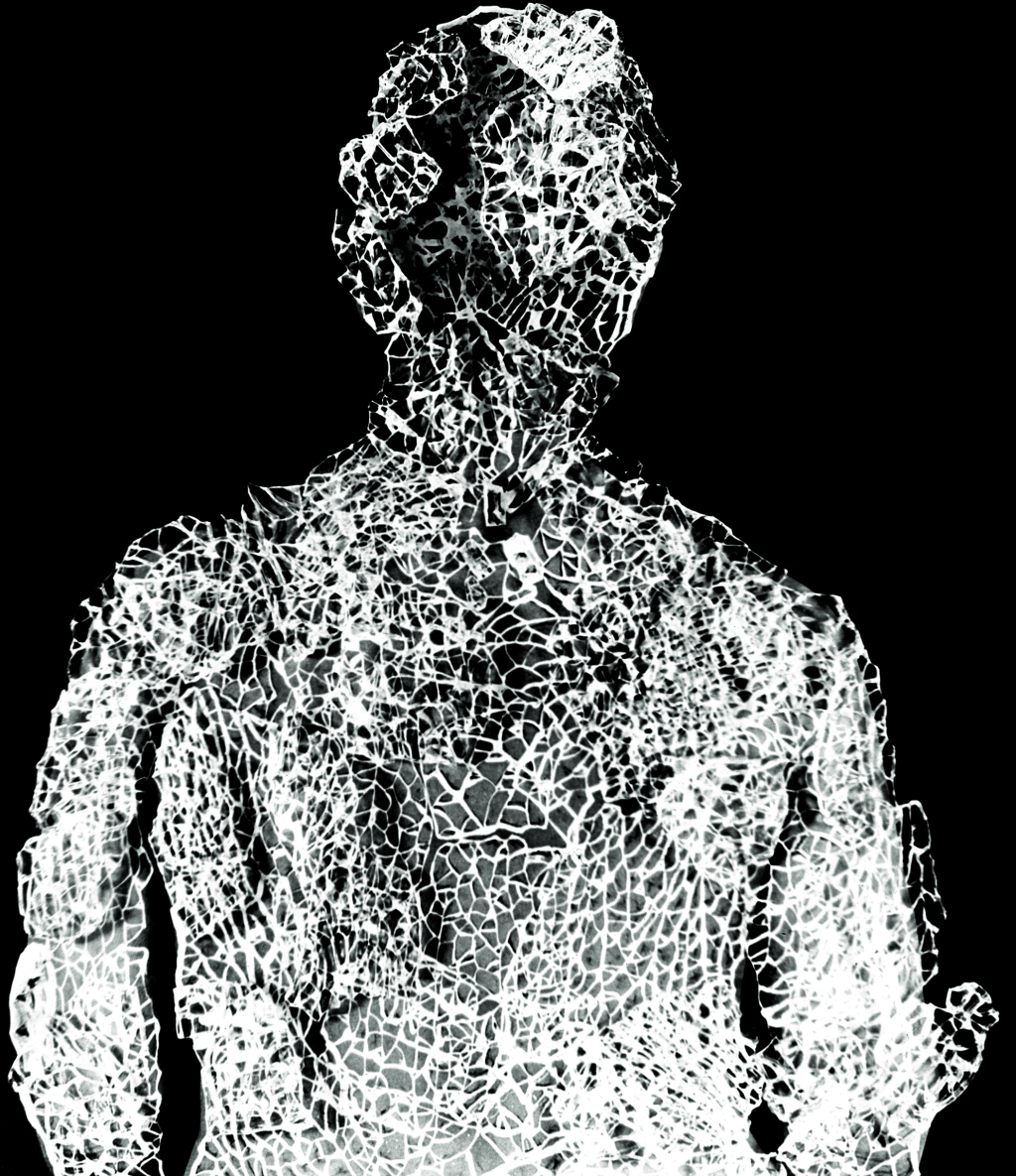
A look into a new possible resource, Photoeye.com, I came across Deborah Padfield and her collection from 2005 called the Perception of Pain.
As a fun-fact. I suffer from a chronic pain condition and there hasn’t been a day in my memory that I’ve not suffered, one way or another. With that, it was this image that stuck with me and it became one of my selections.
Weekly Task
Find two images that demonstrate ways of seeing.
In your blog:
1. Explain why you have chosen the images.
2. How do they represent a particular way of seeing?
For example from a particular point of view (in the broadest sense
possible).
Selection One – Perception of Pain
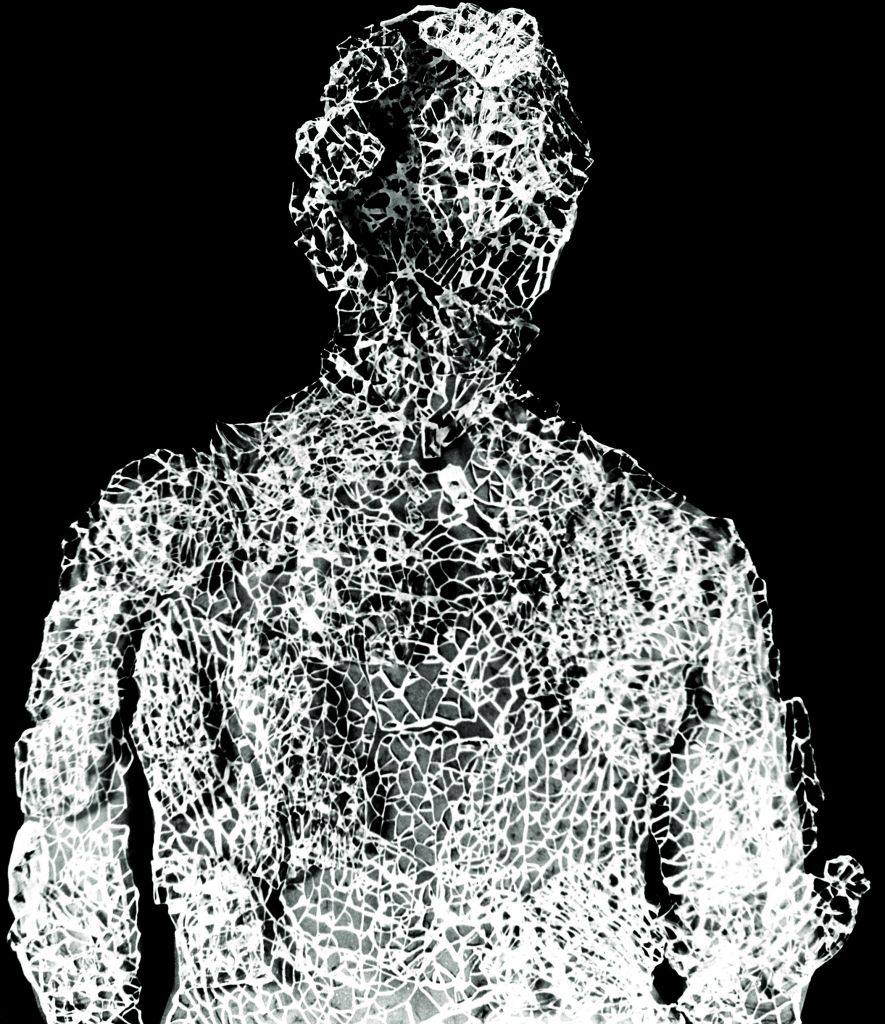
I do not understand this image from Padfield’s viewpoint but from my own, it feels close to my own perception on existence. Everywhere you look around this persons body, there’s something there. Something running through it. That’s how my world is. There isn’t a part of me that hasn’t been in pain at one point. My entire world and perception is twisted due to my own pain. This is probably the closes depiction to Chronic Pain I’ve found.
The marks are all internal. It’s that persons own struggle to deal with. Those on the outside wouldn’t know it’s there without being told. It’s understanding that people have problems, regardless of their size, and they hold the potential to consume us. Whether its something chronic/terminal or just a bad injury, they’re internal but change our entire world during that time. The rest of the world is unchanged by our issue.
Selection Two – Harley Bainbridge
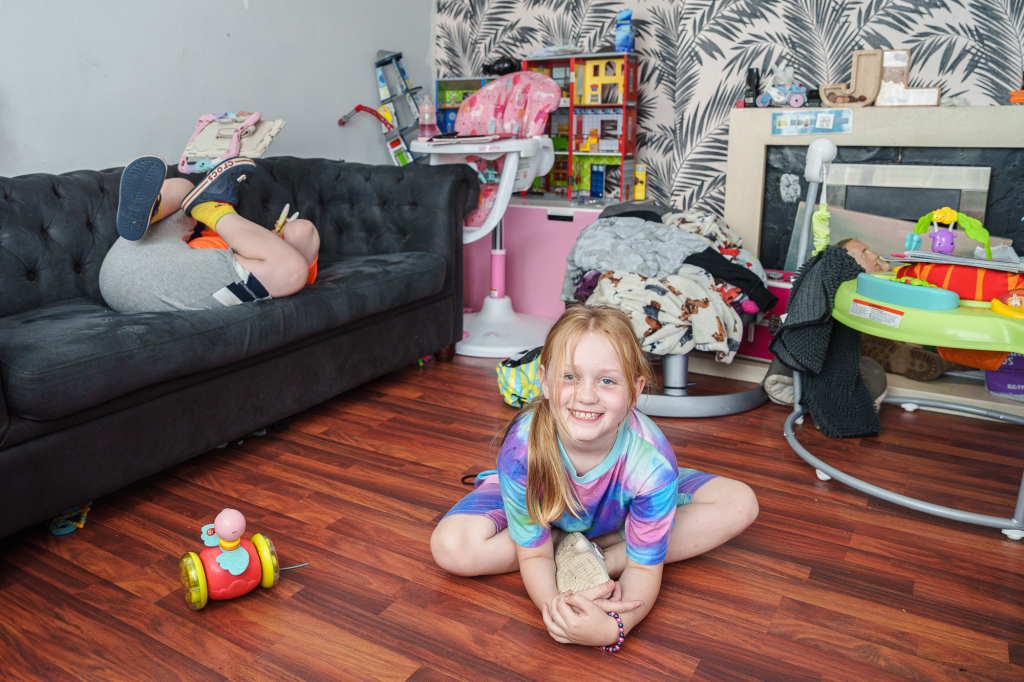
As humans, we all share a few specific experiences. One of those is that we were once children. Our childhoods may be different, easy or hard, kind or cruel, but we all had one. This image, from the collection “The Family Ogden”, is being used to showcase a family with two autistic children and their lifestyles. Something that, when you hear raising autistic children, you assume is a hardship.
Yes, raising children with or having autism is no easy feat and comes with extra challenges no one prepares you for. But this image shows that, at their core they are still children. Showing a perspective of them that is often forgotten or shunned by society. Showing a way of seeing their world for a change, not just our own.


 AlphaRose Photography
Leave a comment